Small Engines
Clean or replace a carburetor
by Edward J. Thunderbird
The number one fix for small engines that won't start, surge, or only run on choke.
DifficultyModerate
Time1 to 2 hours
Do it yourself$10 to $40 (clean) or $15 to $60 (replace)
Hire a pro$90 to $180
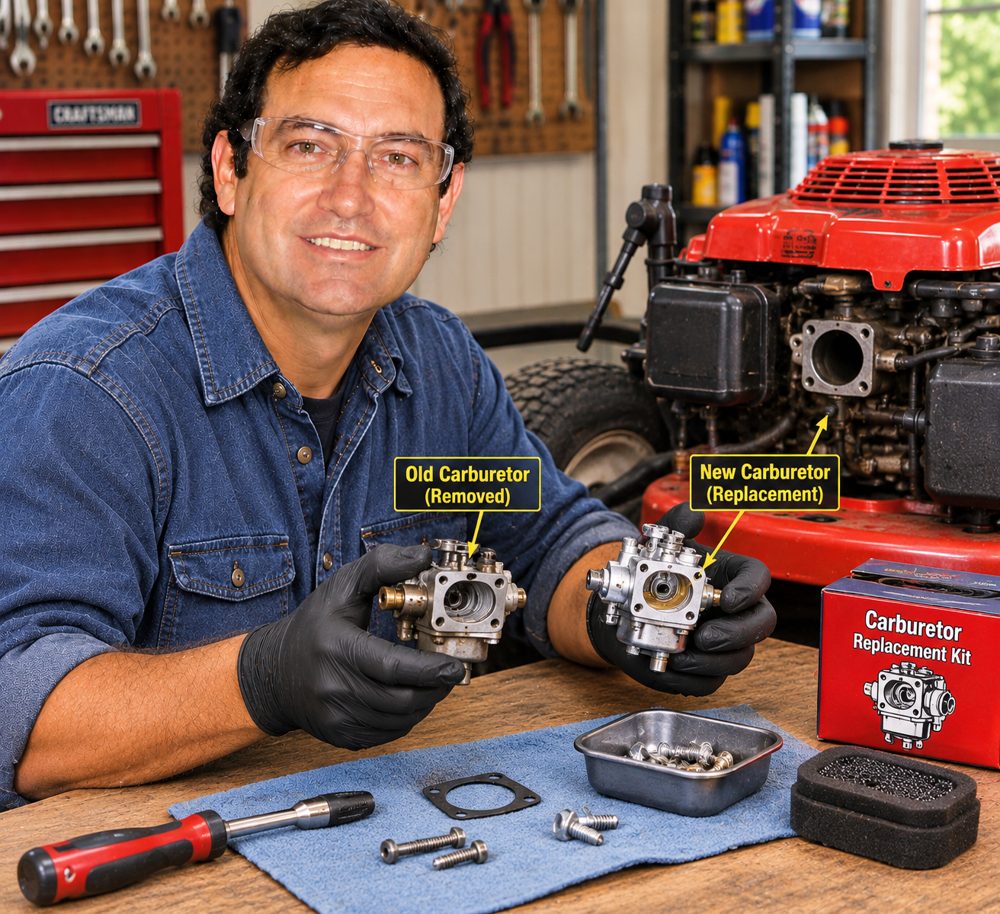
Signs of the problem
- Will not start, or starts then dies
- Runs only with the choke on
- Surges up and down
- Leaks gas from the carburetor or air filter
- Water droplets or white gunk in the float bowl
How it works
The carburetor mixes gas and air through jets with holes smaller than a pin. Old gas leaves varnish that plugs them. You have two choices: clean it (cheap, works when the varnish is light) or replace it (often $15 to $40 for an aftermarket carburetor, and the surest fix when it is badly gummed, corroded, or the engine sat for a year or more). Many repair shops simply replace them now.
Tools and parts
Tools
- Screwdrivers (Tools Critical)
- Wrenches (Tools Critical)
- Pliers (Tools Critical)
- Small wire or carburetor jet-cleaning kit
- Phone camera (to photo the linkage)
- Shop towels and a small tray
Parts and what they cost
| Part | Typical cost |
|---|---|
| Carburetor cleaner spray | $6 to $10 |
| Bowl gasket and needle kit (for cleaning) | $8 to $15 |
| Replacement carburetor with gaskets (aftermarket) | $15 to $40 |
| OEM carburetor | $40 to $120 |
| New fuel line and filter | $5 to $12 |
Total cost
| Cost | |
|---|---|
| Do it yourself | $10 to $40 (clean) or $15 to $60 (replace) |
| Hire a pro | $90 to $180 |
Costs are typical U.S. prices checked November 18, 2026; they vary by region and change often. Pro prices include labor. Fix Critical is not paid by any store or brand.
Step by step
Safety first
- Gas is in the bowl: work outdoors with rags, no flames.
- Wear safety glasses: cleaner spray stings.
- Pull the spark plug wire before working on a mower.
- CLEAN OR REPLACE? Clean it if the engine sat only a season and the inside looks lightly varnished. Replace it if it is crusty, corroded, has white powder or green gunk in the bowl, or cleaning did not fix it.
- Find the engine model number (stamped on the engine shroud, for example Briggs & Stratton or Honda GCV160) to order the right carburetor or kit.
- Shut off the fuel valve or pinch the fuel line. Take photos of the throttle and choke linkage and springs from several angles.
- Remove the air filter housing, then the two nuts or bolts holding the carburetor. Unhook the linkage springs and fuel line.
- TO CLEAN: remove the bowl (one bolt on the bottom). Unscrew the main jet and spray cleaner through every hole until you can see light. Clear holes with a fine wire, never a drill bit. Check the float and needle move freely, and fit a new bowl gasket.
- TO REPLACE: compare the new carburetor to the old one side by side. Move over any parts it needs (like the choke linkage) and use the new gaskets in the same order as the old.
- Reinstall using your photos, connect the fuel line (replace it if cracked), add fresh gas, and start it. Let it run a few minutes; adjust idle speed if the carburetor has an idle screw.
- STILL WON'T START? The fuel may have water or dirt in it, and it will just plug or flood the clean carburetor again. Drain the tank, fuel line and bowl into a clear jar and look for water beads, a separate layer, cloudy gas or rust. Rinse the tank with a little fresh gas, replace the fuel filter, and refill with fresh gas from a clean can.
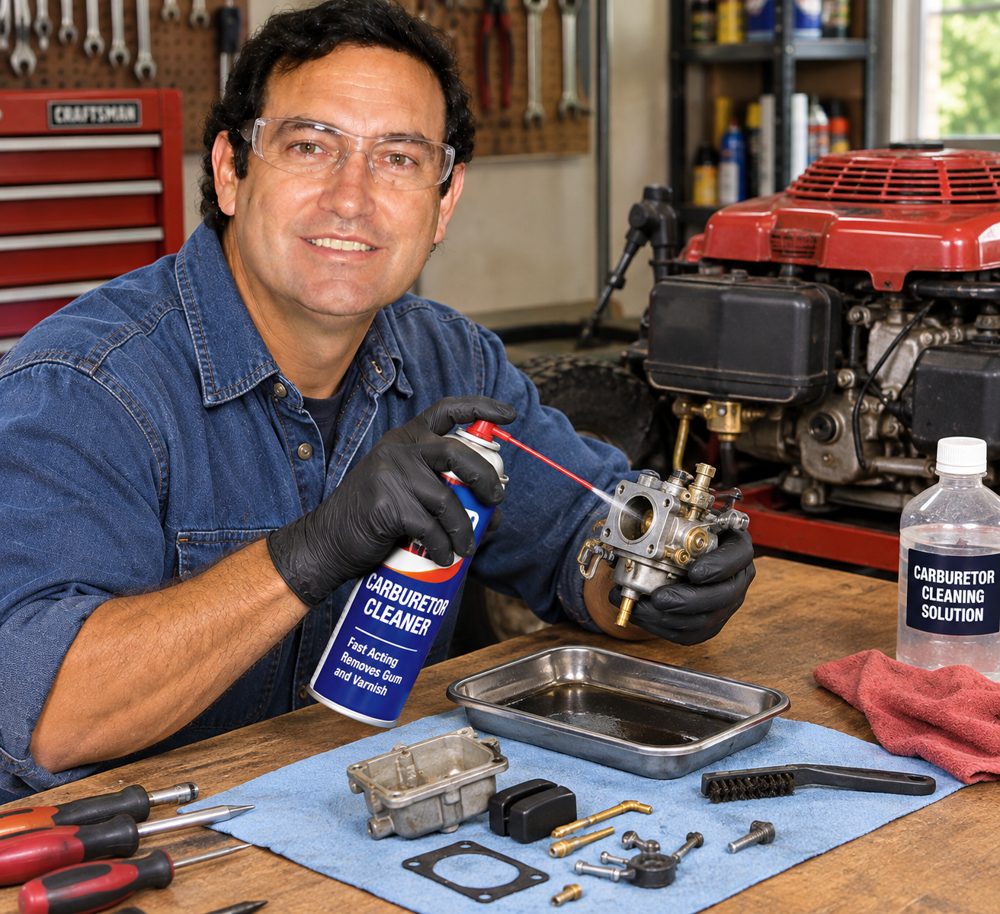
Maintenance: keep it from happening again
- Use stabilizer or ethanol-free gas.
- Shut the fuel valve and run the carburetor dry before storage.
- Replace the fuel filter and cracked fuel line each spring.
When to call a pro
If a new carburetor does not fix it, a shop should check the governor, valves and compression.