Small engine won't start
Mower, tiller, chainsaw or generator that won't start. Nine times out of ten it is the carburetor.
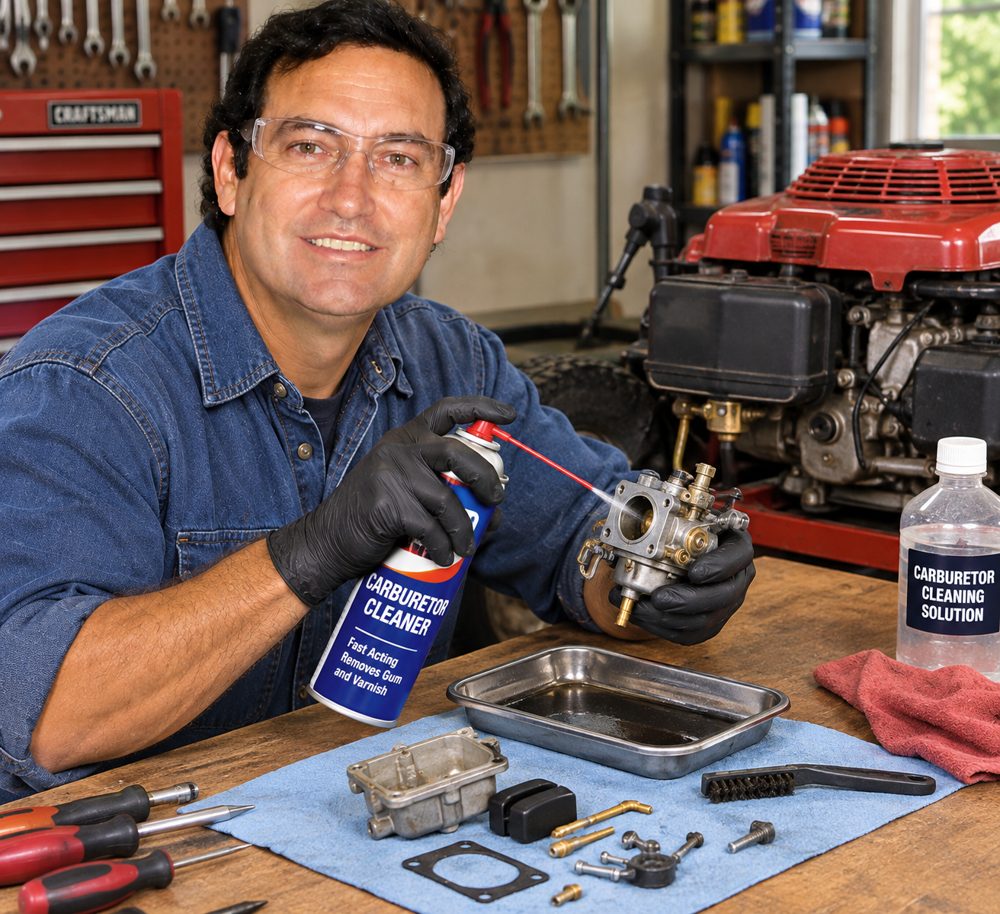
Signs of the problem
- Pulls over but never fires
- Fires, then dies after a few seconds
- Starts only with choke or starting fluid
- Sat all winter with gas in it
- Runs a moment, sputters and dies (water in the fuel)
How it works
A small engine needs three things: fuel, a spark, and air. By far the most common cause of a no-start is the carburetor: gas left sitting for a month or more goes stale and leaves varnish that plugs the carburetor's tiny jets, so no fuel reaches the engine. Ethanol in pump gas makes it happen faster. The next most common cause is bad fuel: water or dirt in the gas. Ethanol gas absorbs moisture from the air, and once it holds enough, the water and ethanol separate and sink to the bottom of the tank and carburetor bowl, where the engine picks it up first. An engine will not run on water. The other causes (a fouled spark plug, a clogged air filter, a safety switch) are quick to rule out first.
Tools and parts
Tools
- Screwdrivers (Tools Critical)
- Wrenches (Tools Critical)
- Pliers (Tools Critical)
- Spark plug socket
- Inline spark tester
- Carburetor cleaner spray
Parts and what they cost
| Part | Typical cost |
|---|---|
| Carburetor cleaner spray | $6 to $10 |
| Replacement carburetor (most common fix) | $15 to $40 |
| Fresh gas and fuel stabilizer | $10 to $15 |
| Inline fuel filter | $3 to $8 |
| Spark plug | $4 to $8 |
| Air filter | $6 to $15 |
Total cost
| Cost | |
|---|---|
| Do it yourself | $10 to $50 |
| Hire a pro | $80 to $180 (shop minimum plus carburetor work) |
Costs are typical U.S. prices checked November 18, 2026; they vary by region and change often. Pro prices include labor. Fix Critical is not paid by any store or brand.
Step by step
- Work outdoors, with the engine cool.
- Pull the spark plug wire before touching the blade.
- No smoking or flames near gas; wipe up spills.
- Check the obvious: fuel valve open, choke on for a cold start, kill switch on RUN, blade bail held down.
- Drain old gas. If it smells like varnish or is darker than fresh gas, it has gone bad. Refill with fresh gas.
- Rule out the spark plug and air filter: replace a black, wet or crusty plug and a dirty filter.
- The carburetor test: spray a one-second shot of carburetor cleaner into the air intake and pull. If the engine fires and then dies, the spark is fine and fuel is not getting through: the carburetor is plugged.
- Clean the carburetor (bowl, main jet and passages), or replace it. On most mowers and small engines a new aftermarket carburetor costs $15 to $40 and is often faster and more reliable than cleaning. See Clean or replace a carburetor.
- If it still will not run after the carburetor is cleaned, suspect water or dirt in the fuel. Drain ALL of it: the tank, the fuel line and the carburetor bowl. Look at what comes out in a clear jar: beads or a layer of water at the bottom, cloudy gas, rust or dirt mean contaminated fuel.
- Replace the inline fuel filter, refill with fresh gas from a clean can, and try again. Check your gas can too; if it has water in the bottom, empty it, dry it and refill.
- If there is no spark at all with a new plug (check with an inline spark tester), the problem is the ignition coil or the kill-switch wire instead.
Maintenance: keep it from happening again
- Use fresh gas with stabilizer, or ethanol-free gas. This one habit prevents most carburetor and water problems.
- Keep gas cans closed tight and out of the rain, and buy only what you will use in a month or two.
- Run the engine dry, or shut off the fuel valve and let it die, before storing more than a month.
- Replace the plug and air filter every season.
When to call a pro
No spark after replacing the plug, no compression (pulls with no resistance), or a bent crankshaft after hitting something.