Vehicles and Trailers
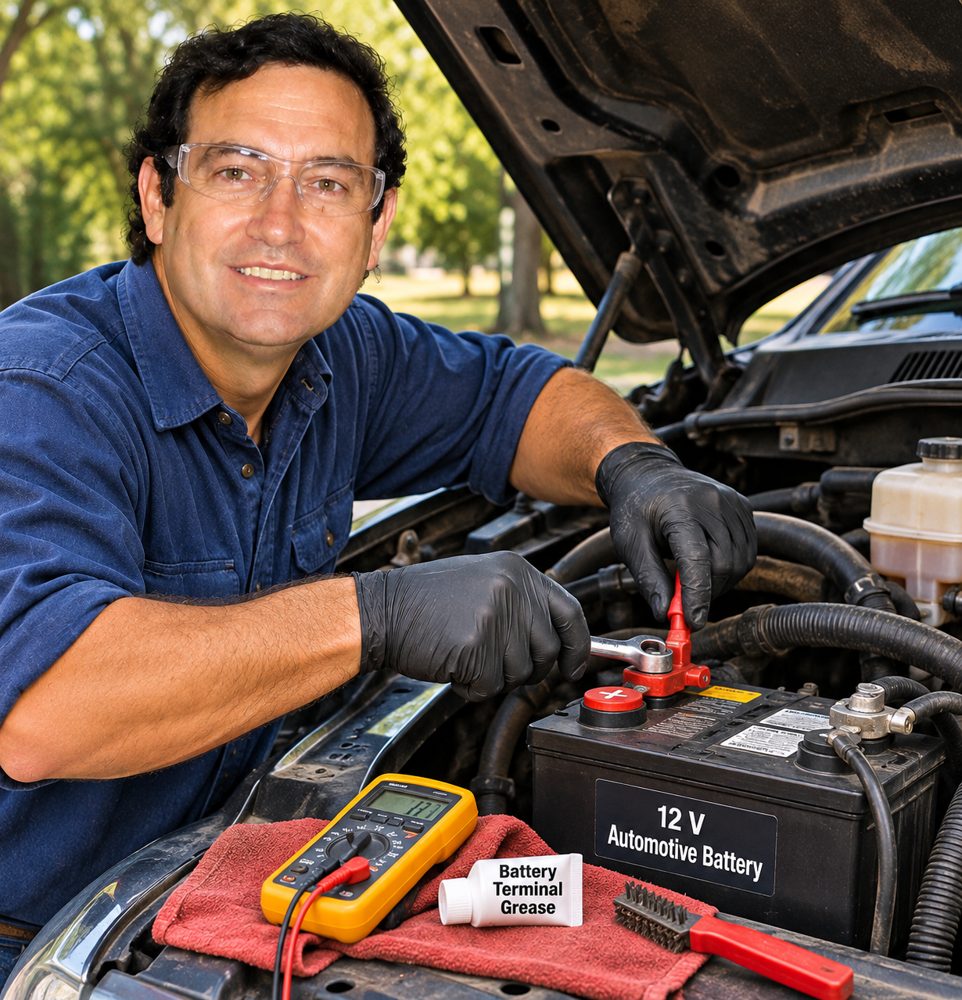
Test and replace a battery
by Edward J. Thunderbird
Slow cranking or clicking? Test it before you buy a new one.
DifficultyEasy
Time20 to 30 minutes
Do it yourself$0 to $250
Hire a pro$150 to $350 installed
Signs of the problem
- Slow crank
- Clicking with no start
- Dim lights
- Battery more than 4 to 5 years old
How it works
A healthy 12-volt battery reads about 12.6 volts at rest and stays above 9.6 volts while cranking. Corroded terminals cause many no-starts. Most parts stores test batteries free.
Tools and parts
Tools
- Wrenches (Tools Critical)
- Multimeter
- Terminal brush
- Baking soda and water
Parts and what they cost
| Part | Typical cost |
|---|---|
| Battery | $120 to $250 |
| Terminal cleaner and protector | $5 to $10 |
Total cost
| Cost | |
|---|---|
| Do it yourself | $0 to $250 |
| Hire a pro | $150 to $350 installed |
Costs are typical U.S. prices checked November 18, 2026; they vary by region and change often. Pro prices include labor. Fix Critical is not paid by any store or brand.
Step by step
Safety first
- Wear glasses and gloves: battery acid burns.
- No sparks or flames: batteries give off hydrogen.
- Negative off first, on last.
- Measure voltage with the engine off: 12.6 is full, 12.2 is half, under 12.0 is low.
- Clean green or white corrosion with baking soda and water and a terminal brush.
- Charge the battery or have it load-tested at a parts store.
- To replace: remove the NEGATIVE (black) cable first, then positive, then the hold-down.
- Install the new battery, connect POSITIVE first, then negative, and tighten the hold-down.
- Recycle the old battery (stores give a core refund).
Maintenance: keep it from happening again
- Clean terminals yearly.
- Use a battery maintainer on vehicles that sit.
When to call a pro
Battery keeps dying (could be the alternator or a drain).